
Below is a video lecture I made for my students in Ethics at the University of Makati:
Reference:
Pojman, Louis and Fieser, James. Ethics: Discovering Right and Wrong. 7th ed. Massachusetts: Wadsworth, 2006.
Below is a video lecture I made for my students in Ethics at the University of Makati:
Reference:
Pojman, Louis and Fieser, James. Ethics: Discovering Right and Wrong. 7th ed. Massachusetts: Wadsworth, 2006.
I know that it has been quite a long time since I last posted something on this website. My apologies to my very modest number of followers (hehe), who personally sent me private messages asking whether this site is still active. I have been quite busy lately having started different ventures here and there — the most recent being that I am now also work as a lecturer on a part time basis at the University of Makati.
Yes, I am back in the academe again and it has been great! I currently teach philosophy subjects such as Ethics and Logic. It dawned on me that I have a bachelor’s and a master’s in philosophy and yet I am not making use of them in my career. From a financial standpoint, they are not making me money. On the other hand, from a personal standpoint, my level of understanding in philosophy had been stagnant for a very long time(more than half a decade), rendering the said degrees to become merely as paper decorations that not even hanging them on the wall would be considered worth it. So last November 2020, I started sending applications, was invited for a panel interview and teaching demonstration in December, got hired in January, and started teaching in February. Now that I teach public university students, my morale has been boosted knowing the fact that in my simple way, I am able to reach out to society through my students and, in effect, have a sense of public service.
Although there are challenges brought about by adding another active stream of income, I am able to manage. One of which is the fact that I have to adapt to the new normal way of teaching considering that the whole world is impacted by this Covid-19 pandemic. We were encouraged to lessen our synchronous classes (real time online classes) in favor of making pre-recorded video lectures that our students could access at their own pace and time. This difficulty is understandable since most of my students are government scholars and (thanks to the the unreliable internet connection in the Philippines) could not afford more expensive internet plans; hence, they attend online classes without turning on their cameras since they are only using a limited amount of data. This poses a challenge to me because it is quite hard talking and not connecting to an audience at the same time. I very much prefer to give a lecture to a physical audience, but these are troubled times and one has to adapt.
Moreover, preparing pre-recorded video lectures consumes a lot of time. It used to be that teacher and professors study and prepare for the lessons in class. Now, apart from constantly updating myself for the subjects that I teach, I have to add more items to my preparation checklist: study the topic, read a book, make an outline summary, create a powerpoint slide, create a video and edit it, upload the video online for my students to see. This requires a lot of work considering that I have a full time job.
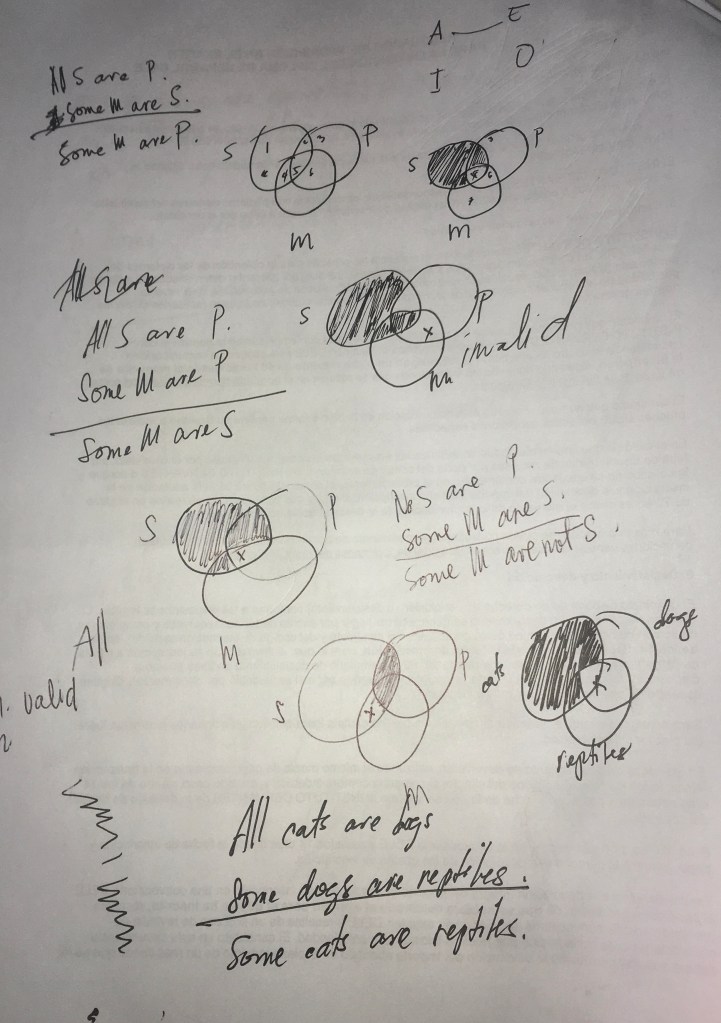
Reviewing the Venn Diagram in Analyzing the Validity of Syllogisms.
However, thanks to technology, I am able to handle it. I know for a fact that this is not a permanent difficulty and it is only burdensome on the first year of teaching since it would be the first time for me to make the materials in class. It should be easier in the succeeding years (should I decide to continue) since I would just have to update my previous materials. So, kapit lang (Hang in there.) as we say in Filipino.
My return to the academe is actually one of the reasons why I decided to work on my website again. One of my projects is to share some of the lessons I give to my students in this website. I plan to add a philosophy section where my site visitors will also be able to see them if they are interested to know more about philosophy. The lessons will be delivered in Taglish (Tagalog and English) though. hehe. So this is an additional feature to look forward to very soon.
Aside from my academic venture, I also worked hard to find a tenant for my two real estate properties. I hired a 3rd party broker to see if they could find one for me. However, after a year of waiting, they were not able to find one for me. Thus, I decided to work on it myself. In building wealth, we cannot rely on others. There will be times when we will have to take matters in our own hands. Now, I am happily making rental income from my two properties. I will write about it in a separate blog article. They may not be enough to substitute what I make from my corporate job, but they establish the foundations of building my own empire.
I still continue to work as a bilingual specialist. The money is good and it pays the bills. At this point, it would be crazy to give it all up, at least not during these times of pandemic. Our company is generous and quick enough to respond to the needs of the times. When the Covid-19 virus first hit the Philippines in March 2020, we were one of the first companies that started to implement the work-from-home (WFH) setup. I continue to enjoy the benefits of working from home and that is the reason why I was able to recover, contemplate on my next steps, and start different ventures.
So far those have been the updates I am sharing for now. I will definitely work on this website more often starting today. There are quite a number of contents I am going to upload. I will definitely share them.
Again, to all those who expected to see more contents, my apologies. I am back!
I saw this interesting video clip in Youtube:
The story struck me. It makes me wonder as to how long I am willing to work my ass off to live the life that I want. Besides, what is the point of having a good-paying job and having spent all those years learning Spanish to land on a high-paying job just to end up in the rat race working in perpetuity before I can finally get off and live the life the way I want? The story of the Mexican fisherman presents to us a situation of a vicious circle. The businessman convinces him to amplify his livelihood from a mere job to launching his very own IPO just so he can cash in his chips, retire early and do the things that he is already currently doing with his present lifestyle. It does not make any difference to skip from Point A to get to Point B and C just to end up to A.
A question is raised: Why work for a long time to live a life that you want rather than living the life that you want right now while working?
Having read Rich Dad, Poor Dad, it became clear to me that I do not want to be an employee for the rest of my life. I work because I want to learn things I can use in the future in order to create my own business and thus, establish multiple sources of income. Kiyosaki points out one fault of colleges and universities, i.e. to train future employees with the hope of retiring in their old age. There may be exceptions but this is the main “blueprint” in which traditional schools operate.
The reason why I studied and work for big corporations is so that I can learn. After school, employment will be the next source of information. Companies are excellent sources of information. What better way to get educated than attending free trainings and workshops to learn the ropes of business and, in most cases, get paid? The objective is to train new hires, expose them to real-life situations with a plethora of soft and hard skills. Given that employers invest money in people, it is natural that they expect something in return. The very principle in economics is that there is no such thing as free lunch; everything has a price.
There is nothing wrong with being an employee provided that a person is clear with his objectives. Some people are happy being employees and that is completely fine. Society cannot operate if all people are business owners. Who would account for curing the sick, teaching the illiterate, solve crimes and so on and so forth if all people are too busy dedicating their lives to their own businesses. Nevertheless, people who are, like me, have no plan of being an employee forever, who have a vision of establishing business and providing jobs to others, those who dream of being free to do things that matter the most, then business and investing is the way out.
The best way to do is to enjoy life in the here and now while being clear to gradually, slowly but surely work one’s way out of the rat race. Work hard for a reason. There is nothing wrong with enjoying life to the fullest as long as you remain grounded and determined to your objectives and live a life in moderation.
I regularly have lunch at McDonald’s at Mckinley West, Taguig City. Though I cannot completely say that the place has all the amenities that a regular McDonald’s branch has (Most of the time some of the menu are not available.), I am somehow satisfied with their services. I have been going to that place to buy my favorite brewed coffee. The isolated franchise along the road is equipped with a modern touch-screen technology that taking orders has become (supposedly) customer-friendly, despite the fact that such modernization still calls for so much room for improvement.
Everything went normal as usual until one day I saw this:
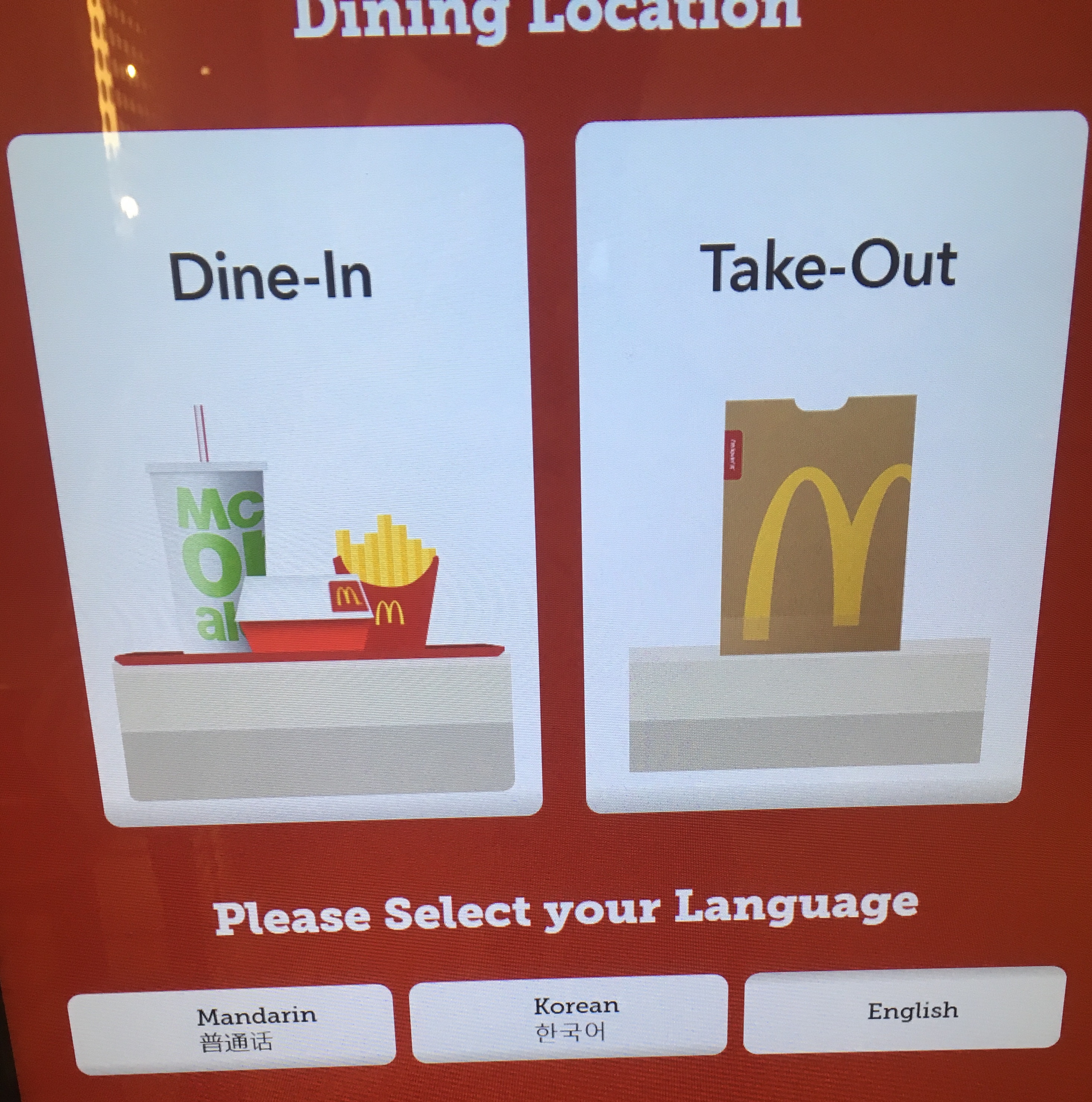

Yes. The menu is now available in different languages. One can now order in Korean and, in most cases, Chinese. My interest, however, lies in the propagation of the latter not only in the Philippines but in the world as a whole. What would have been considered inconceivable decades ago has now been happening in many McDonald’s branches here in the Philippines. Who would have thought to find a Chinese menu in a fast-food chain in the Philippines, where most of the people can hardly even read (much more write!) a single word in Mandarin? Indeed, we are now entering the dawn of a “Chinese Economy” not only in the Pearl of the Orient, but in the entire Asia or perhaps the whole world. The dragon is no longer sleeping and it spits fire!
One can only imagine how the Philippines or the world is going to look like 5 to 10 years from now. I would not be surprised to see some business establishments post their ads or instructions in both English and Chinese. In Hong Kong this is not new. Cantonese and English labels are everywhere.
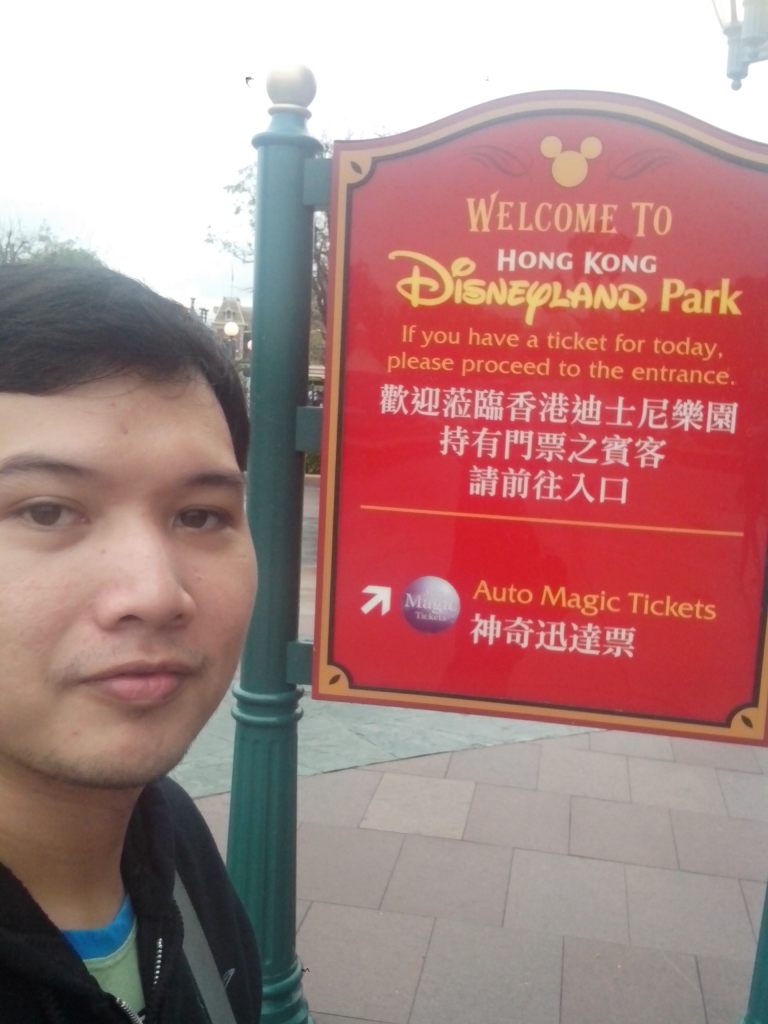

In Macau, its neighboring former Portuguese colony, it is not uncommon to hear the IVR (Interactive Voice Response) to announce the next bus station in 3 languages (Cantonese, Portuguese and English). Their presence already adds more color to the melting pot of 3 rich cultures.
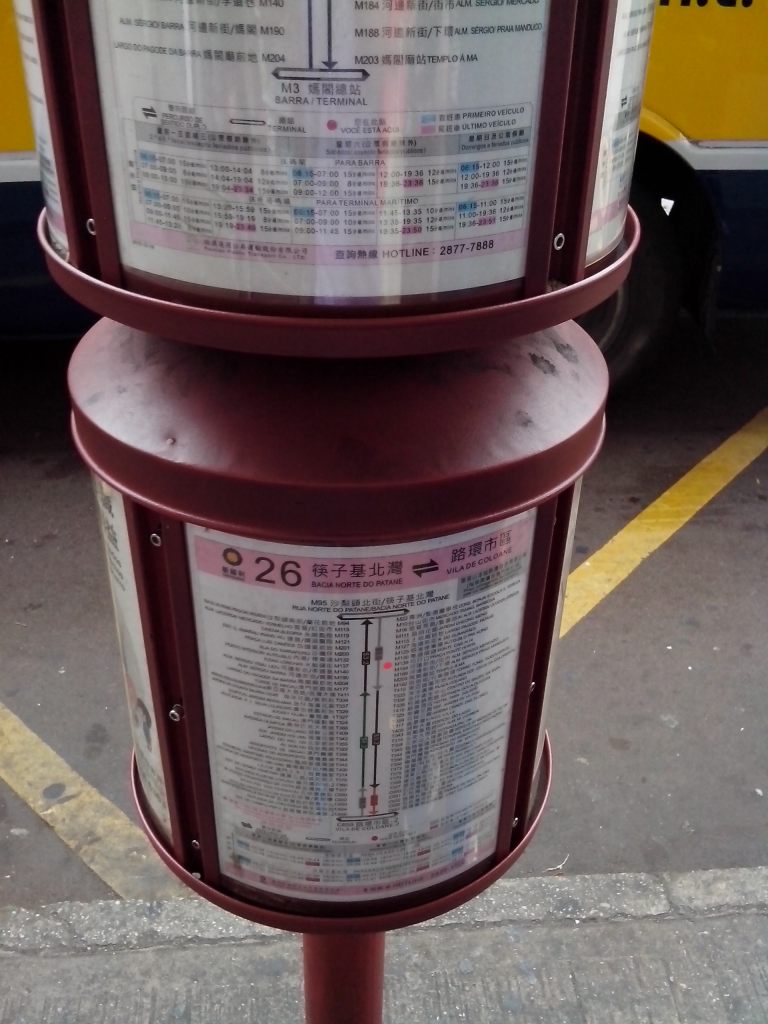

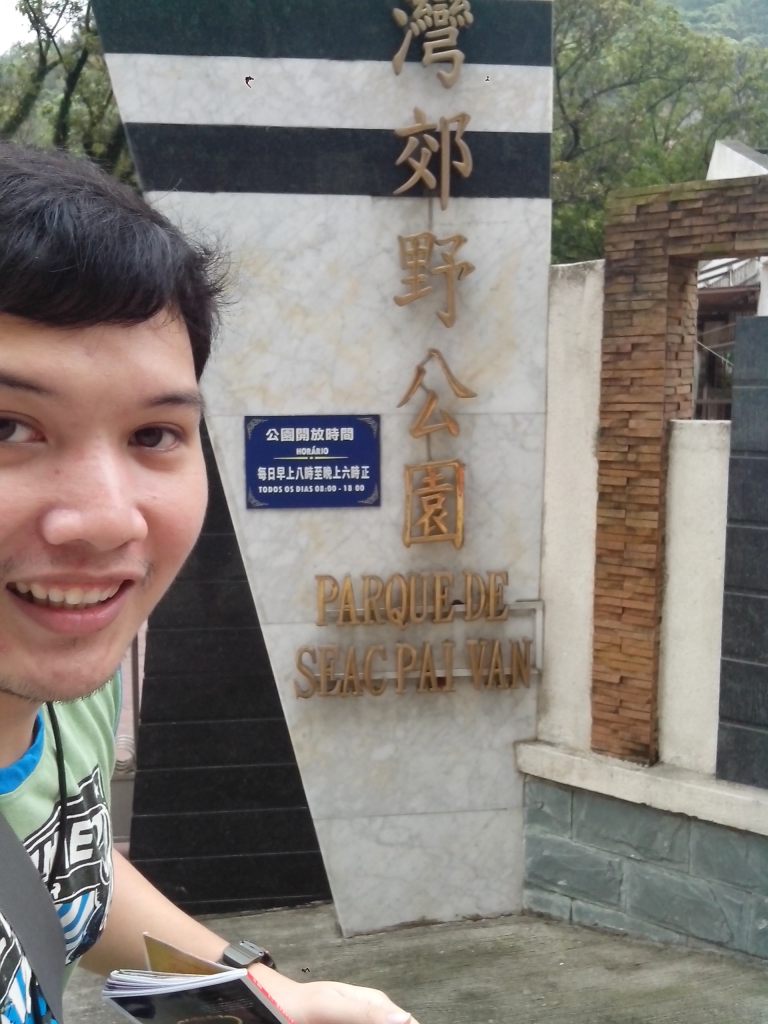
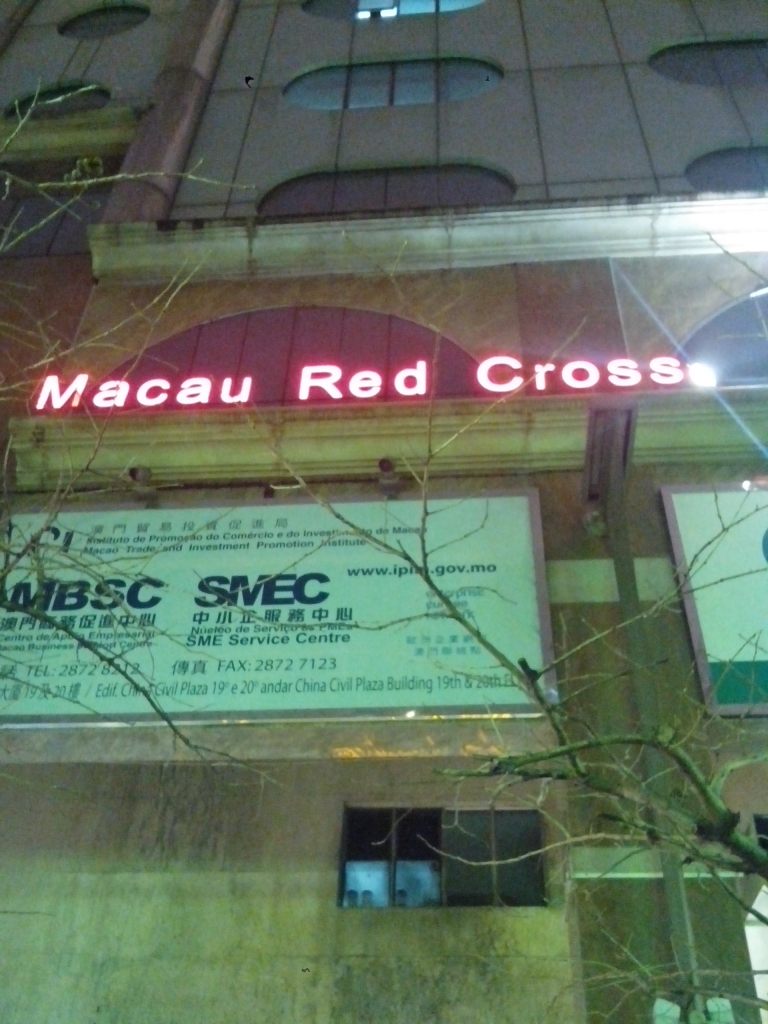

Disclaimer: Photos in Hong Kong and Macau were taken back in 2014
The Philippines, on the other hand, is a different story. Albeit there are a number of historical documents and evidence that show the long-standing relationship between the Pearl of the Orient and the Middle Kingdom since the Pre-hispanic times, not one of the Chinese languages can be considered as ubiquitous as that of Spanish (another former colonizer) and English (courtesy of the United Sates, another colonizer). In a country that has Filipino as its national language but its laws written in English and a national anthem originally written in Spanish, not one of the Chinese languages had such presents until now. This part of Asia as well as the world is going to change.
In this case, there are only 3 possible outcomes: to ignore such change, to resist or ride with and take advantage of it. The first option is good only for those who prefer to let life take charge of them rather than the other way around. This type of laissez faire attitude is the normal reaction for those who only act when the fire has started — when it is already too late and there is less to gain. The second one is for those purists who refuse to give in to change and see it as another one of China’s political and economic machinations with the end goal of conquering the world. Exaggerations aside, I used to think this way until one day I gave up. The third is the more logical option. The old cliche of you joining whatever you cannot beat may not necessarily be a negative thing. Personally, I am totally against the so-called Chinese Money Trap. Like any thinking individual, I still have my reservations. Nevertheless, I have nothing against progress, i.e. change for the better.
To paraphrase the old wisdom passed upon us by the Ancient Greek philosopher, Heraclitus: Change is the only thing that does not change in the world as we live in a world of constant change. (Literally there is a lot of “change” in that previous statement, but you get my point.) The presence of Mandarin in the Philippines is a by-product of the ever growing Chinese investment that our government accepted with open arms. Along with it comes Chinese jobs, Chinese companies and everything Chinese! There is no point in murmuring and complaining about forces that is beyond our control. Instead of being stuck with the denial state, it is more productive to learn Mandarin or better yet, do what many countries of the world is doing: let their children learn Mandarin for them to have a better future. In a previous post, I wrote about how learning another language can double or triple one’s salary. (See Bilingual Opportunities.) Moreover, it is also helpful and productive to add to one’s reservoir of soft skills anything that can be used to make the most out of the inevitable reality that is Chinese economy. A simple research on the Chinese culture especially on how it can be helpful in doing business would be a good start.
The world is going Chinese and there is nothing we can do about it. Therefore, it is incumbent that we do what it takes to use it to our advantage.
Me gusta trabajar por mi cuenta. Así que si tuviera la opción querría jugar en la bolsa de mercado. Para hacerlo, ahorraría bastante capital, me registraría en cursos por la cual aprendería los “trucos” para manejar los riesgos y aprovechar las oportunidades donde podría ganar. Ese es el trabajo de mis sueños.
Por nada del mundo haría los tipos de trabajos que me obligarían tener un jefe. No soportaría que alguien me diera órdenes o que requiera hacer cosas que para mí no valdrían la pena.

Luck is what happens when preparation meets opportunity.
-Seneca, Roman Philosopher
Game changers do happen in one’s career. Be it a promotion, a new job that pays a 6-figure salary, or a new business capital raised from one’s lottery winnings, its frequency varies from person to person. Even Aristotle admitted that some people are born lucky. Nevertheless, one needs to be in a constant lookout for such things, for when they go, they may be gone for good.
I, for one, turned down a number of opportunities when I was younger. They could have influenced what I am today. There were some decisions that could have changed the entire course of my life. I am sure each of us has a fair share of such an experience. The reality is we cannot turn back time. Those missed opportunities may not return. Some may be luckier to have second chances, but life is indeed a box that may not always be filled with sweet, good-quality chocolates (to put a pun on what Forrest Gump said).
What then is the point of moving forward? What is the point of pursuing a degree, of learning a new skill, or on working hard on achieving our dreams if all of life is but a game of chance – a couple of few windfalls enjoyed only by a chosen (lucky) few?
There is hope; there is a sense of purpose. Now that we have established that life is filled with occasional game changers, preparation is key. One can never go wrong with preparation. Opportunities do come and go. I would rather be prepared when I am lucky than be lucky yet unprepared. This fine demarcation is what distinguishes successful people from the rest. They work hard so that when an opportunity opens, they catapult themselves to their goals. Game changers are catalysts in that they can fast forward events to help us reach our goals faster. Success is, therefore, not merely all about luck. It is a combination of luck and hard work.
We may not have any control as to when game changers present themselves in the course of our career. However, we do have control over our decisions. It is either we wait for life to throw lemons at us or we have baskets ready to catch them!
At some point in my career I thought I became stagnant. I thought I reached a plateau in terms of career growth. I believed there was no chance for me to be greater than where I was. Until one day, one company – one whose offer I rejected twice – contacted me and “gave me another job offer I could not refuse”. It showed me some figures I never anticipated early on in my corporate career. Not only that, they were even willing to wait for me for 2 months before I could go on board with them. I always work hard to be good at my craft, but I never expected that an opportunity would present itself to help me get to my goal faster. It was my game changer.
I eventually signed up and am now a part of this new company. I made the right decision and I am happy with where I am now. This new company values me for what I can do. It never fails to let me feel that I am part of something big. I am proud to be part of a team that plays a crucial role in meeting the company’s goals and objectives. For me, this is the very definition of preparation meeting opportunity. It changed everything – it changed my plans, the direction of my career, my ambitions. Am I lucky? I say I am prepared for such an opportunity.
We may feel like we are working hard only for naught. We need to change our mindset. It is completely fine to work hard, just do not do it blindly. Work hard and at the same time be vigilant of game changers.

I work as a Bilingual Customer Service Representative. I say bilingual because I make use of 2 languages in my line of work, namely English and Spanish. I support both English- and Spanish-speaking customers who are mainly in the United States and its territories. In my previous work, however, I was also tasked to handle concerns of customers in South America, such as Mexico, Honduras, Guatemala, El Salvador and Nicaragua. My language skills have been my bread and butter for more than 3 years now.
Being bilingual gives an individual more chances to land in lucrative job opportunities. This is so true in the Philippines. Even in professional online sites like LinkedIn and Job Street, one can see posts that say company A is looking for a candidate who is fluent in Spanish, French, German, Portuguese; the same can be said for Asian languages like Mandarin, Nihongo, Bahasa and Korean. The second category even pays more!
Francisco Colayco, one of the country’s renowned financial advisers, even said that the market value of an individual is multiplied by the number of foreign languages s/he fluently speaks. This implies that parents should better start sending their children to foreign language schools as early as possible, so that by the time they embark on their respective careers, their market value will have already dramatically increased. Talk about giving them a good head start!
The demand for multilinguals in the Philippine job market has increased over the years. The booming sector of Business Process Outsourcing (BPO) has contributed a great deal to this.
It is of no surprise that many foreign nationals decide to come to the country to find jobs, usually in the BPO sector. I, for one, have worked with Spanish speakers from Spain and Latin America. The ongoing recovery from the recession in Spain and the economic downturn brought about by the political situation in Venezuela are some examples. So long as the BPO companies grow, there will always be a demand for bilingual careers.
This being the case gives a new meaning to the statement: It pays (better) to learn many languages.
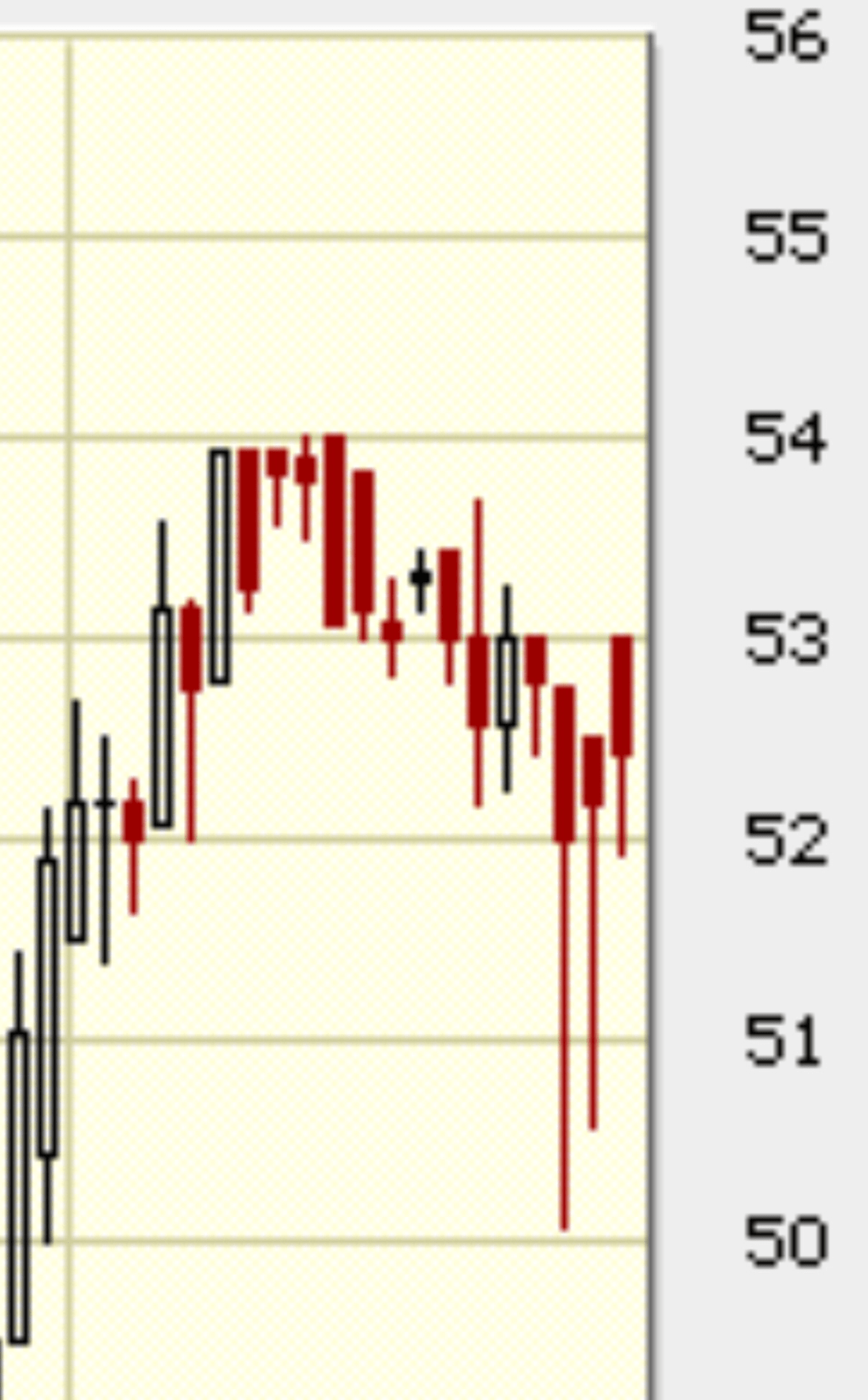
I have been into investing since 2014. This started when my friends and I were talking about life insurance. Back then, I happened to have a life insurance that was linked to my newly opened savings account. It was a simple life insurance coverage that offers up to 5 times the amount of whatever I have in my savings account. That was the only thing that I knew about life insurance. As naïve as I was back then, I was surprised when my friends asked me how much my monthly premium was. Apparently, I had no idea because I was not paying any. Then they introduced the concept of Variable Universal Life (VUL) insurance to me, which in plain and simple terms is a life insurance with an investment component. Then they talked about mutual funds and the stock market. Suddenly something in me was awakened. I was very much interested in what they had to say. Eventually, I decided to get a VUL for myself and that was the time when my investment journey began.
I knew I was hooked into learning about saving and investing. I read every book and online material I could find. It is often said that one should first invest in one’s self and so I did. I followed this advise to the letter. I enrolled in both free and paid (sometimes expensive) seminars about investing. I got acquainted with terms such as stocks, UITF, mutual funds, and even in real estate. So long as it was within my budget, I spared no expense.
Fast forward 4 years later, how have I been doing? Well, I would not dare lie to you and say that everything went smoothly. The had been roadblocks and pitfalls along the way. One cannot talk about investments sans the concept of risk. As a matter of fact, all forms of investments are accompanied by different degrees of risk. In a nutshell: the bigger the risk, the higher the potential. In the same fashion, the lower the risk, the lower the potential reward. Some of my investments earned me money; many ended up with losses. This is the hard truth and not without a simple reason – nobody can predict the future. The same thing applies to the so-called fortune tellers! If these clairvoyants do, they would have been richer than Warren Buffet himself, don’t you think? Not even the Oracle of Omaha himself is immune to incurring losses.
I did make investment mistakes and I still do. It is part of the game. I think this is part of being human. I have lost thousands and there is not turning back! The most that I can do – just like any normal person would do – is learn from my mistakes. I would rather lose thousands now, than lose millions later. I would rather learn the skills to minimize (not eliminate) risks, than learn them at a time when there is already too much at stake. To paraphrase one of my favorite philosophers, Soren Kierkegaard, life is best understood in retrospect. It pays to look back at the past for guidance. It pays to be a student of history, and there is no other more relevant to us than that of our own.
Despite the investment mistakes I made in the past, I am optimistic. I remain driven. I am still young, and this is the perfect time to err. In the future, mistakes are yet to be made and they make us human. Nevertheless, mistakes are designed to teach us. It is, therefore, our responsibility to transcend the human experience of failure to bring out the best in us. In talking about investments, as well as in life, failures make us better investors and better persons.


Hallo! Ich heiße Vincent. Mein Spitzname ist Vince. Ich bin neunundzwanzig Jahre alt. Mein Geburstag ist am 25. Mai. Ich komme von den Philippinen. Ich komme aus Dumaguete-Stadt, aber ich wohne in Quezon-Stadt. Ich spreche sechs Sprachen: Cebuano, Philippinisch, Englisch, Spanisch, Französisch, und ein bisschen Deutsch. Ich liebe es, Sprachen zu lernen. Jetzt lerne ich Deutsch an der Universität der Philippinen. Meine Deutschlehririn heißt Frau Roorkee Del Rosario Ong. Sie ist Philippinerin. Ich liebe es auch zu reisen, zu lesen, im Internet zu surfen, und zu schreiben.
Studieren und gleichzeitig zu arbeiten ist nicht einfach. Ich bin eine sehr beschäftige Person. Ich habe einen Tagesablauf. Normalerweise stehe ich um elf Uhr auf. Ich frühstücke um elf Uhr dreißig. Ich fahre mit dem Jeepney zum Deutschkurs. Ich studiere Deutsch von Dienstag bis Freitag, von dreizehn Uhr bis vierzehn Uhr dreißig an der Universität. Ich arbeite bei Maersk. Ich fahre mit dem Auto zur Arbeit. Die fängt um sechzehn Uhr an. In meinem Büro spreche ich Englisch und Spanisch. Ich arbeite von Montag bis Freitag. Um ein Uhr gehe ich nach Hause zurück. Ich schlafe um zwei Uhr. Am Wochenende kaufe ich im Einkaufzentrum ein. Meine Freundin und ich machen Sport und wir gehen im Park spazieren. Am Abend sehen wir uns im Kino einen Film an oder manchmal wir essen in einem Restaurant. Für jetzt ist das alles.

¡Hola Sir X! ¿Qué tal?
Soy Vicente, tu estudiante de español y de lógica anteriormente. Espero que todavía me recuerdes y también que no te importe si te escribo de manera informal tal lo hacíamos en la clase. Han pasado muchos años desde la última vez que te vi. Decidí a escribir en español, aunque sé que no es perfecto (jejeje). Obtuve tu email de Angeli, tu estudiante que es también mi colega de trabajo en la empresa Maersk. Me contó que estudia español en UP y automáticamente le pregunté si te conoce y el resto es la historia… Por cierto, trabajo en Maersk como un analista bilingüe. Es por esta razón que te escribo. Te agradezco muchísimo porque has sido mi inspiración para perseguir con esta carrera.
Querría contarte un poco de mi historia solo para mostrarte cómo hiciste un impacto en mi vida. Espero que no te aburra:
Estábamos tristes cuando terminamos las 12 unidades de español contigo. Pero gracias por los 2 años de aprendizaje porque nos introdujiste otra oportunidad; nos ha impartido una habilidad y se ha abierto una puerta que yo nunca había considerado en los primeros 14 años de mi vida. En 2007 (cuando era tu estudiante) me di cuenta de que la vida religiosa no es para mí. Por eso, salí del seminario después de 2 años. Trabajé como instructor de filosofía en la facultad de Capitol Medical Center donde enseñé a los estudiantes de enfermería y tecnología médica. Les enseñaba lógica, bioética y filosofía del ser humano. En realidad, elegí esta profesión porque me inspiraba. Tu método para enseñarnos era muy estricto, pero aprendimos mucho y de esta manera nos reforzó para ser más críticos y más acertados con nuestros argumentos. Además, sacamos lo mejor de nosotros. En 2011 me matriculé en el programa de master en filosofía de UP y lo terminé en 2013. Mientras enseñaba y hacía el master, continúe aprendiendo español en el Instituto Cervantes. Es que en ese tiempo pensaba solicitar por una beca en España o en cualquier país latino. Estudié hasta nivel B1 porque era muy difícil a organizar una clase debido a que hubo pocos estudiantes en Cervantes para los niveles más altos.
Me encantó ser instructor de filosofía por casi 6 años. Sin embargo, en 2015 el gobierno introdujo el programa K+12. Creo que ya sabes que no hubo estudiantes suficientes en las facultades y universidades en Filipinas. Era como una crisis para muchos de los profesores e instructores. Tuve que dejar de enseñar y buscar otra manera de ganar dinero. Esto es la otra razón que te agradezco: dado que pude comunicarme en español, solicité un trabajo en los sectores de BPO. Nunca había pensado que podía usar esta habilidad y nunca había esperado que pudiera ganar más. He estado trabajando como bilingüe durante 3 años. Hay muchas cosas que debo aprender, pero como nos decía en la clase: poquito a poco. En realidad (y te lo voy a contar ya que ya no soy tu estudiante jejeje), me odiaba el español. No comprendí porque necesitábamos cumplir este requisito para obtener un título. Ahora, lo aprecio y estoy muy agradecido por haberlo aprendido. Ya que, debido a esta lengua, puedo alcanzar mis sueños. 😊
Otra vez, desde el fondo de mi corazón, gracias por inspirarme a ser instructor y gracias por ensañarme esta lengua muy rica y maravillosa. Cuando eras nuestro profesor, nos trataste como tus hermanos. Aún puedo recordar que nos lo que nos decía: todos somos iguales y que no existe el monopolio del conocimiento. Estos principios me permitieron sobrevivir a la escuela de postgrado y tener éxito en mi carrera. Nosotros admirábamos tu pasión para que aprenderíamos a pesar de que a veces éramos difíciles de enseñar. jajaja
Ojalá que nos veamos pronto. Sé que eres un hombre muy ocupado, pero espero que podamos hablar. Sería muy difícil para mí si hablemos en español, pero lo voy a intentar.
Tu estudiante,
Vicente
 My Road to Success!