What I Learned From the Fisherman’s Story

The Mexican Fisherman

I saw this interesting video clip in Youtube:

The story struck me. It makes me wonder as to how long I am willing to work my ass off to live the life that I want. Besides, what is the point of having a good-paying job and having spent all those years learning Spanish to land on a high-paying job just to end up in the rat race working in perpetuity before I can finally get off and live the life the way I want? The story of the Mexican fisherman presents to us a situation of a vicious circle. The businessman convinces him to amplify his livelihood from a mere job to launching his very own IPO just so he can cash in his chips, retire early and do the things that he is already currently doing with his present lifestyle.  It does not make any difference to skip from Point A to get to Point B and C just to end up to A.

A question is raised: Why work for a long time to live a life that you want rather than living the life that you want right now while working? 

Rich Dad, Poor Dad

Having read Rich Dad, Poor Dad, it became clear to me that I do not want to be an employee for the rest of my life. I work because I want to learn things I can use in the future in order to create my own business and thus, establish multiple sources of income. Kiyosaki points out one fault of colleges and universities, i.e. to train future employees with the hope of retiring in their old age. There may be exceptions but this is the main “blueprint” in which traditional schools operate. 

The reason why I studied and work for big corporations is so that I can learn. After school, employment will be the next source of information. Companies are excellent sources of information. What better way to get educated than attending free trainings and workshops to learn the ropes of business and, in most cases, get paid? The objective is to train new hires, expose them to real-life situations with a plethora of soft and hard skills. Given that employers invest money in people, it is natural that they expect something in return. The very principle in economics is that there is no such thing as free lunch; everything has a price. 

There is nothing wrong with being an employee provided that a person is clear with his objectives. Some people are happy being employees and that is completely fine. Society cannot operate if all people are business owners. Who would account for curing the sick, teaching the illiterate, solve crimes and so on and so forth if all people are too busy dedicating their lives to their own businesses. Nevertheless, people who are, like me, have no plan of being an employee forever, who have a vision of establishing business and providing jobs to others, those who dream of being free to do things that matter the most, then business and investing is the way out.

The Right Approach

The best way to do is to enjoy life in the here and now while being clear to gradually, slowly but surely work one’s way out of the rat race. Work hard for a reason. There is nothing wrong with enjoying life to the fullest as long as you remain grounded and determined to your objectives and live a life in moderation.
The Change That Is China

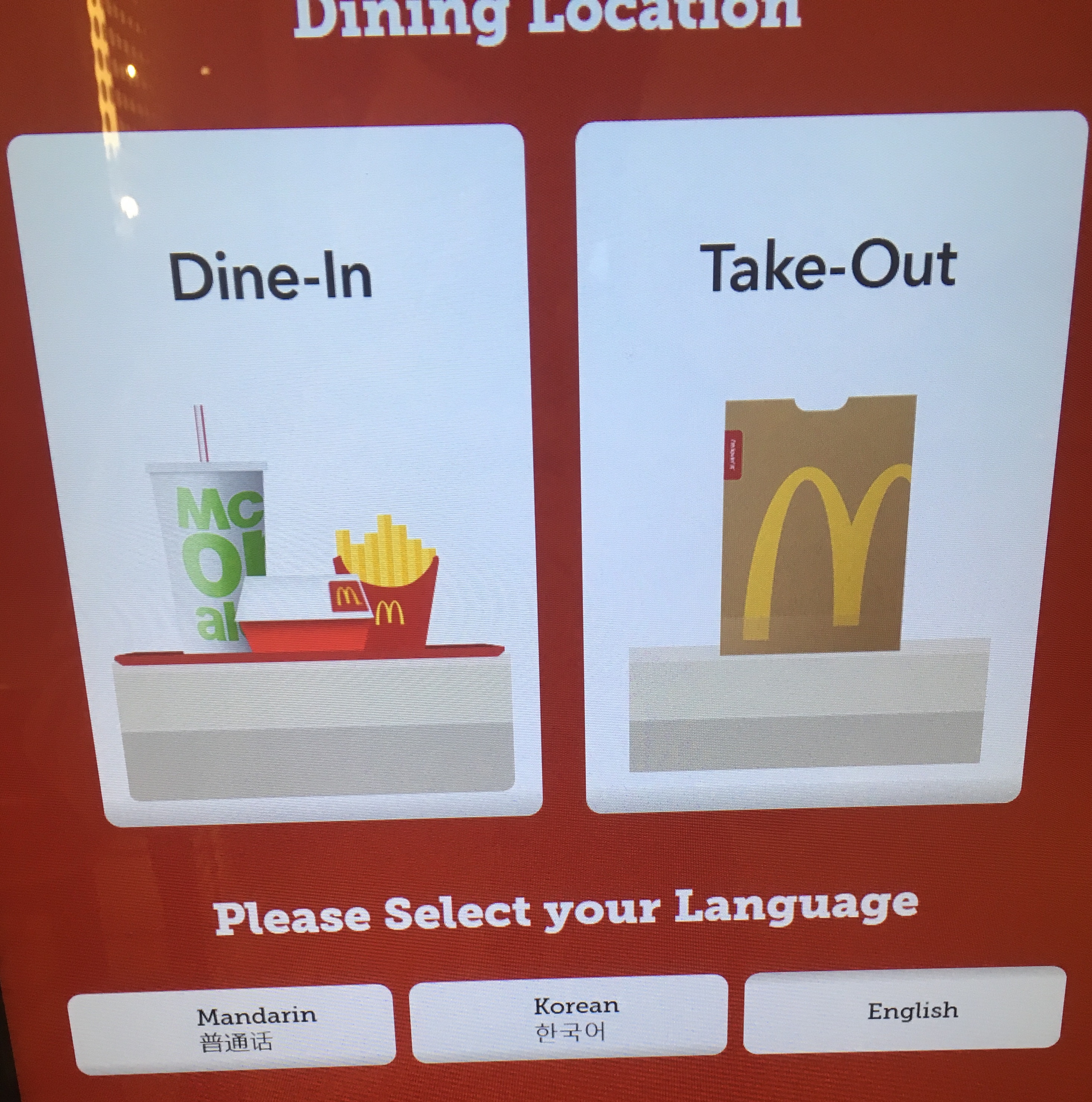
I regularly have lunch at McDonald’s at Mckinley West, Taguig City. Though I cannot completely say that the place has all the amenities that a regular McDonald’s branch has (Most of the time some of the menu are not available.), I am somehow satisfied with their services. I have been going to that place to buy my favorite brewed coffee.  The isolated franchise along the road is equipped with a modern touch-screen technology that taking orders has become (supposedly) customer-friendly, despite the fact that such modernization still calls for so much room for improvement.

Everything went normal as usual until one day I saw this:

Yes. The menu is now available in different languages. One can now order in Korean and, in most cases, Chinese. My interest, however, lies in the propagation of the latter not only in the Philippines but in the world as a whole. What would have been considered inconceivable decades ago has now been happening in many McDonald’s branches here in the Philippines. Who would have thought to find a Chinese menu in a fast-food chain in the Philippines, where most of the people can hardly even read (much more write!) a single word in Mandarin? Indeed, we are now entering the dawn of a “Chinese Economy” not only in the Pearl of the Orient, but in the entire Asia or perhaps the whole world. The dragon is no longer sleeping and it spits fire!

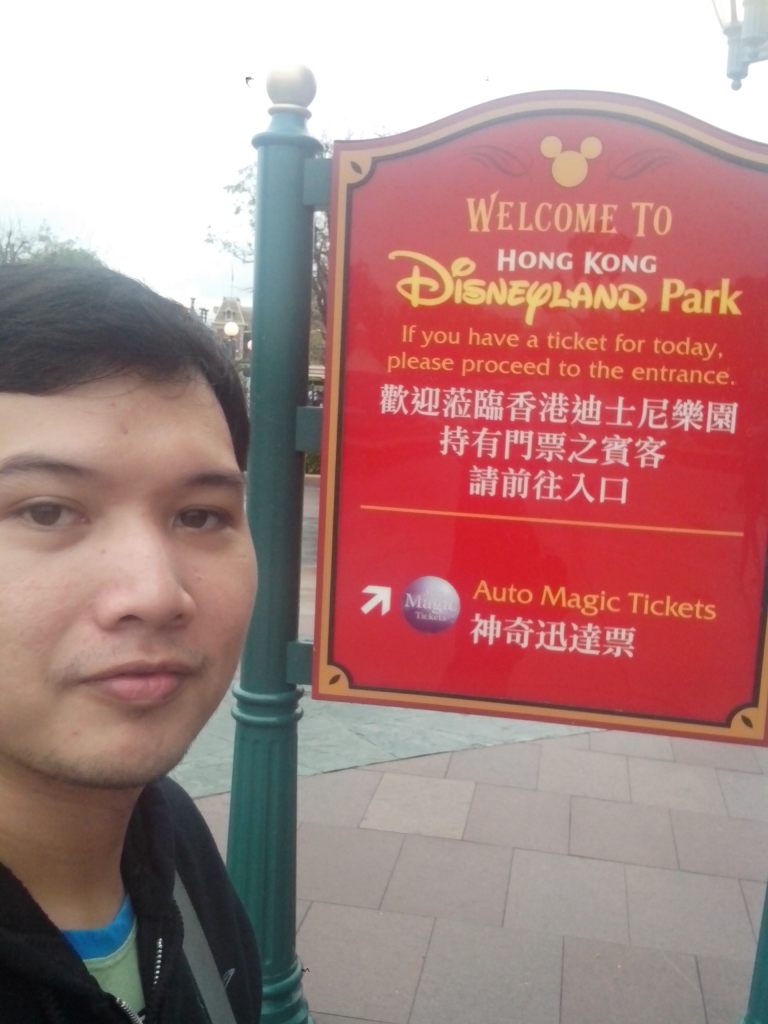
One can only imagine how the Philippines or the world is going to look like 5 to 10 years from now. I would not be surprised to see some business establishments post their ads or instructions in both English and Chinese.  In Hong Kong this is not new.  Cantonese and English labels are everywhere.

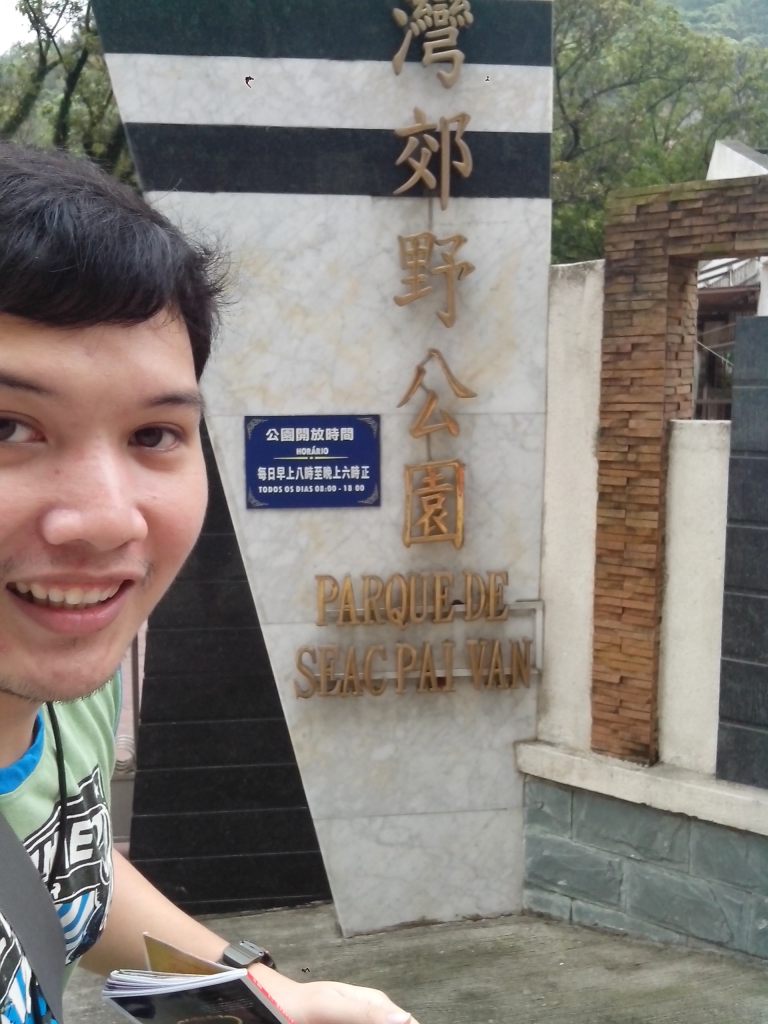
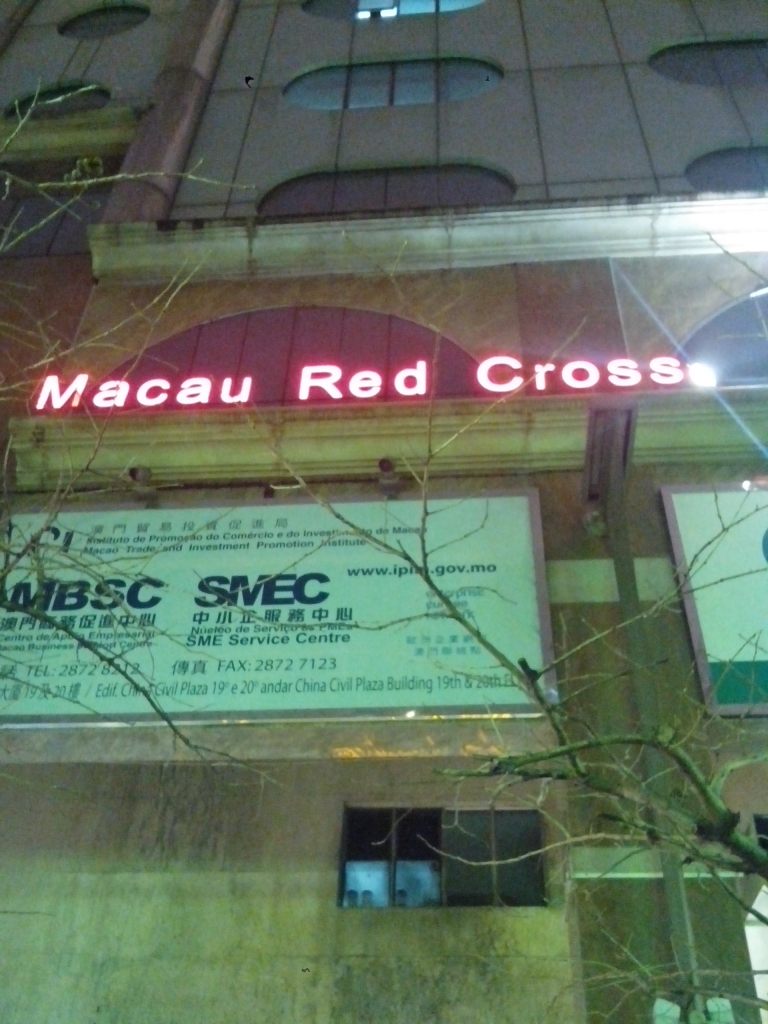
In Macau, its neighboring former Portuguese colony, it is not uncommon to hear the IVR (Interactive Voice Response) to announce the next bus station in 3 languages (Cantonese, Portuguese and English). Their presence already adds more color to the melting pot of 3 rich cultures.

Disclaimer: Photos in Hong Kong and Macau were taken back in 2014

The Philippines, on the other hand, is a different story. Albeit there are a number of historical documents and evidence that show the long-standing relationship between the Pearl of the Orient and the Middle Kingdom since the Pre-hispanic times, not one of the Chinese languages can be considered as ubiquitous as that of Spanish (another former colonizer) and English (courtesy of the United Sates, another colonizer). In a country that has Filipino as its national language but its laws written in English and a national anthem originally written in Spanish, not one of the Chinese languages had such presents until now.  This part of Asia as well as the world is going to change.

In this case, there are only 3 possible outcomes: to ignore such change, to resist or  ride with and take advantage of it. The first option is good only for those who prefer to let life take charge of them rather than the other way around. This type of laissez faire attitude is the normal reaction for those who only act when the fire has started — when it is already too late and there is less to gain. The second one is for those purists who refuse to give in to change and see it as another one of China’s political and economic machinations with the end goal of conquering the world. Exaggerations aside, I used to think this way until one day I gave up. The third is the more logical option. The old cliche of you joining whatever you cannot beat may not necessarily be a negative thing. Personally, I am totally against the so-called Chinese Money Trap. Like any thinking individual, I still have my reservations. Nevertheless, I have nothing against progress, i.e. change for the better.

To paraphrase the old wisdom passed upon us by the Ancient Greek philosopher, Heraclitus: Change is the only thing that does not change in the world as we live in a world of constant change. (Literally there is a lot of “change” in that previous statement, but you get my point.) The presence of Mandarin in the Philippines is a by-product of the ever growing Chinese investment that our government accepted with open arms.  Along with it comes Chinese jobs, Chinese companies and everything Chinese! There is no point in murmuring and complaining about forces that is beyond our control. Instead of being stuck with the denial state, it is more productive to learn Mandarin or better yet, do what many countries of the world is doing: let their children learn Mandarin for them to have a better future. In a previous post, I wrote about how learning another language can double or triple one’s salary. (See Bilingual Opportunities.) Moreover, it is also helpful and productive to add to one’s reservoir of soft skills anything that can be used to make the most out of the inevitable reality that is Chinese economy. A simple research on the Chinese culture especially on how it can be helpful in doing business would be a good start.

The world is going Chinese and there is nothing we can do about it.  Therefore, it is incumbent that we do what it takes to use it to our advantage.